Inside Patan's Metal Workshops
A journey into the rhythmic heart of Nepal's copper districts.
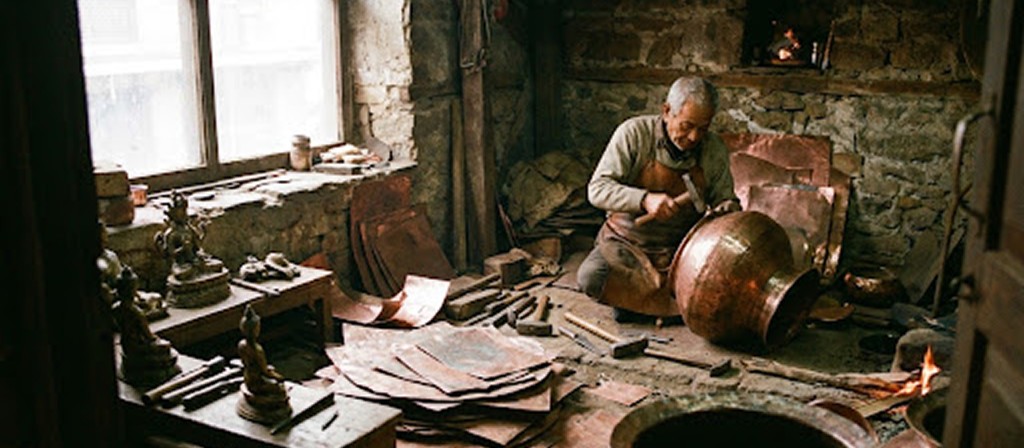
Long before you see the courtyards, you hear them. Walking through the narrow, brick-paved alleyways of Patan, the air carries a distinct rhythm. It is a syncopated symphony of “tink tink” echoing off ancient walls, growing louder as you navigate deeper into the historic quarters of the city. This is the sound of generations of knowledge, struck into copper and brass.
Turning off the main thoroughfare into a hidden, low-ceilinged courtyard, the sensory shift is immediate. The cool air of the alley is replaced by the dry, localized heat radiating off small, earthen forges. The smell of charcoal and burnt dust hangs heavy, catching the sharp angles of morning sunlight that manage to pierce through the small, slatted windows. There is a profound, focused silence among the men working here, broken only by the deliberate strike of the hammer.
Here, metal is not stamped or pressed; it is persuaded. It is shaped by hand, one precise strike at a time. The artisans sit cross-legged on worn floorboards, their tools deceptively simple: anvils embedded in wooden blocks, heavy hammers, and delicate chasing chisels. The knowledge of how to coax a flat sheet of rigid copper into a perfectly rounded, ornate vessel is not written in any manual. It resides entirely in muscle memory, passed down from father to son, master to apprentice, over centuries.
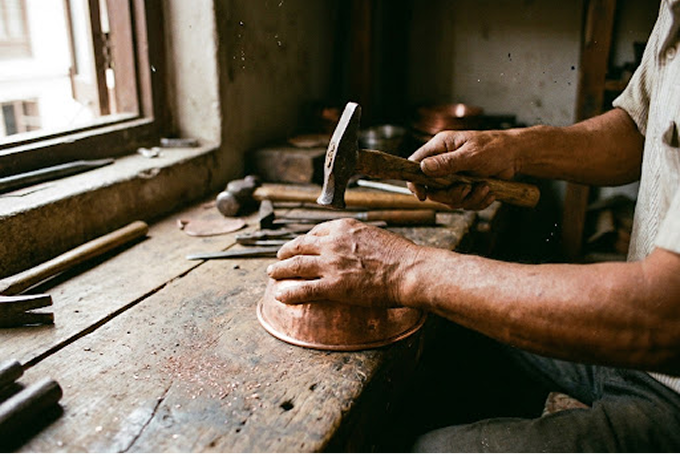
I watch an older craftsman, his face lined with the same deep grooves as the metal he works. He holds a partially formed bowl over an anvil. He doesn’t look at the hammer; his eyes are fixed on the point of impact. The metal must be heated to just the right temperature—annealed—to make it malleable, then hammered while it cools, a delicate balance between force and yielding.
The metal tells you when it is ready to bend, and when it needs to rest. Force it, and it cracks.
The final stages require a different kind of patience. After the shape is finalized, the chasing and repoussé work begins—the intricate detailing that transforms a simple pot into a work of art. Finally, the polishing. It is a slow, abrasive process that strips away the fire scale and reveals the warm, luminous heart of the copper beneath.
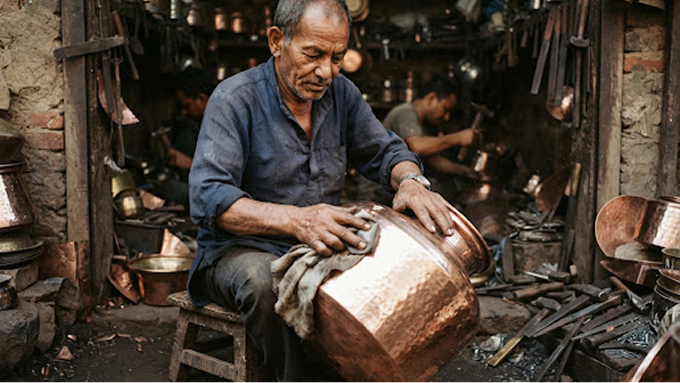
As I leave the courtyard, the “tink tink” sound follows me back into the bustling streets of modern Patan. It is a comforting sound, a reminder that amid the rapid modernization, there remain pockets of deep, quiet dedication to the tangible, the handmade, and the profoundly human act of creation.