The Hands Behind the Shripech
Looking beyond Nepal’s ceremonial crown to the skill, knowledge, and hands involved in making it.
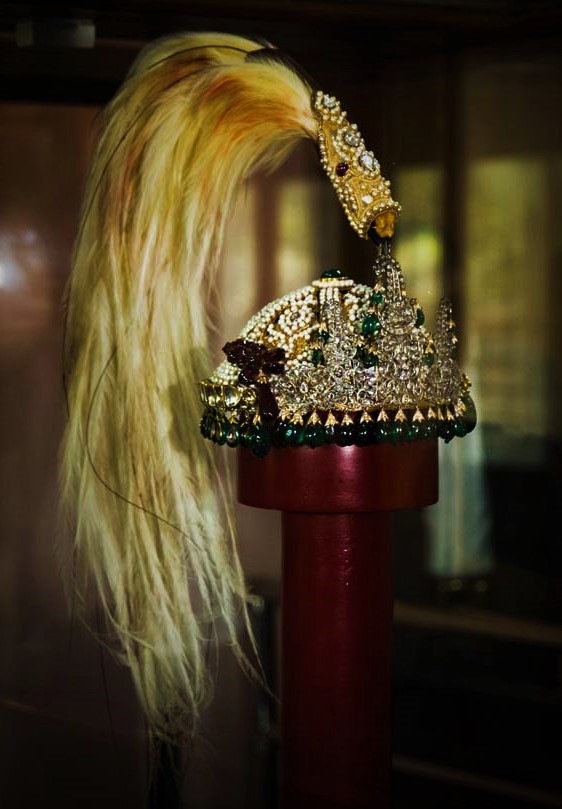
The Shripech is one of Nepal’s most recognizable ceremonial objects. Once worn by Nepal’s monarchs, it is now displayed at the Narayanhiti Palace Museum in Kathmandu.
Its precious stones, elaborate form, and distinctive feathered crest immediately draw attention. But when we looked at the Shripech through the lens of Qala, another question came to mind: who had the knowledge to make something like this?
Before it became an object displayed in a museum, the Shripech had to pass through human hands. Metal had to be shaped, stones had to be set, individual parts had to be assembled, and the finished piece had to be carefully detailed.
Those steps required skilled work. Behind the finished object were people who understood their materials, their tools, and the techniques needed to bring such a complicated piece together.
This is the part of an object’s story that can be easy to overlook. We often know what an important object is, who used it, and where it can be seen today. We may know much less about the people who physically made it.
In the sources we reviewed, we have not yet found clear documentation identifying the individual craftspeople who made the Shripech. Rather than guess who they were, we think that absence is itself a reason to ask more questions about the making.
What tools were used? How were its different parts formed and joined? Who set the stones? How many people worked on it? Where did they learn those skills? These are questions the finished crown alone cannot answer.
Across Nepal, artisans continue to work with metal, wood, stone, paint, textiles, and other materials using knowledge built through years of practice. Much of that knowledge lives in workshops, families, tools, movements, and memories rather than in written records.
The Shripech reminds us to look beyond the finished object. Alongside questions about what something is made from or who once used it, we can also ask how it was made, what skills it required, and whose hands made that work possible.
For Qala, that is where another part of the story begins.